The Red Crab of the Sundarbans
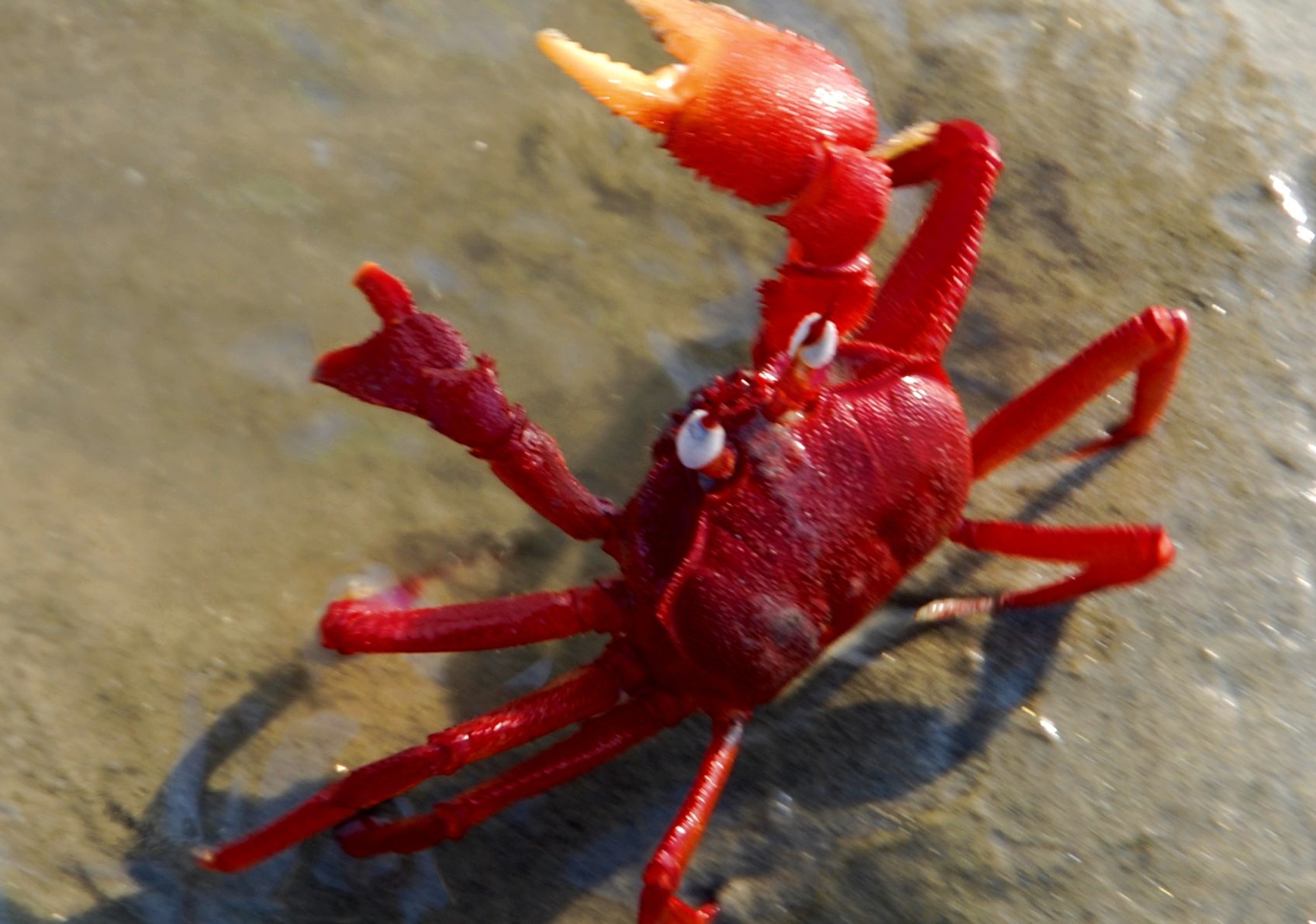
The Sundarbans, the largest mangrove forest in the world, is home to a vast array of biodiversity. Among its many fascinating inhabitants, the red crab stands out due to its striking color and significant role in maintaining the ecological balance of the region. These small but crucial creatures contribute immensely to the health and sustainability of the Sundarbans.
Identification and characteristics of red crabs:
🔹 Physical structure:
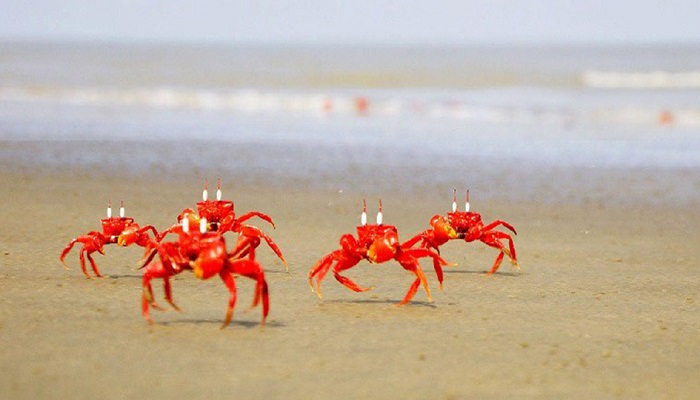
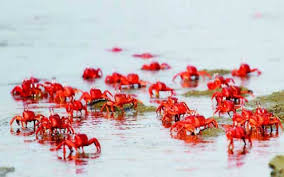
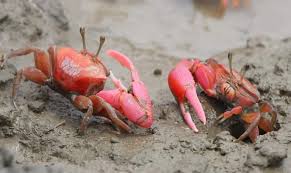
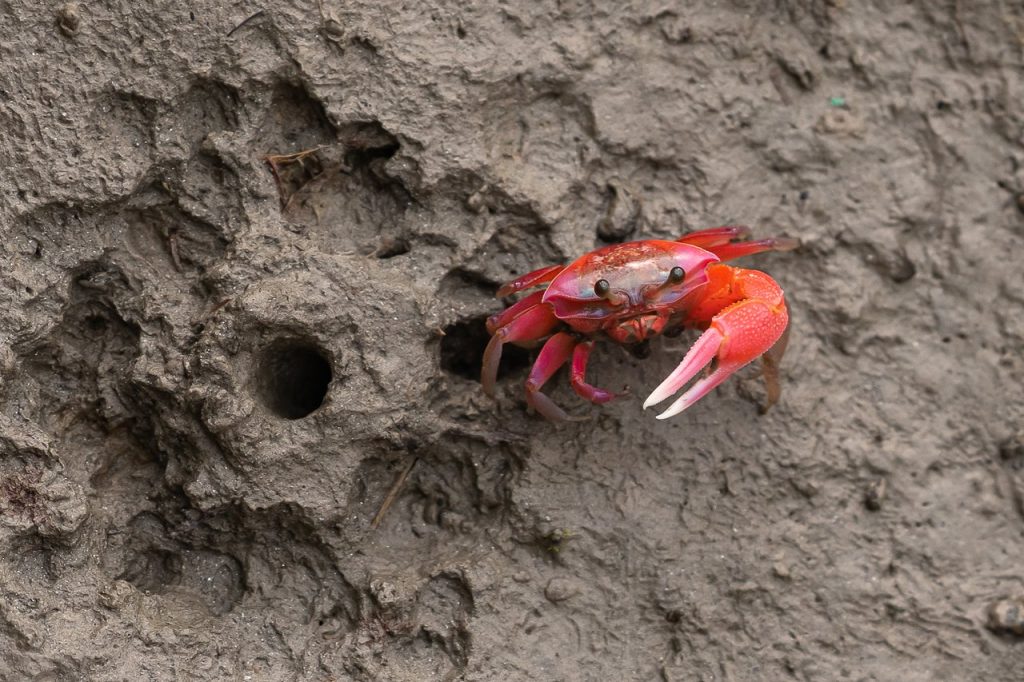
❑ Their main body feature is their bright red or orange color, which is especially clearly visible during the day.
❑ Their body is usually flat and the front part is slightly wider.
❑ Their eyes are located on long stalks, which help them observe their surroundings.
❑ Their legs are slender and strong, which help them move quickly.
🔹 Habitat and distribution:
❑ They are more commonly seen in the estuaries, mudflats and sandy areas of the Sundarbans.
❑ They are usually seen moving during the high and low tides.
❑ They are also found in some places in the coastal areas of Bangladesh, but the Sundarbans are their main habitat.
🔹 Behavior and diet:
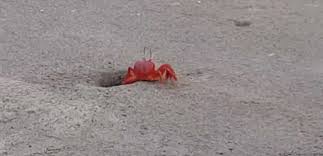
❑ Red crabs are very fast animals and can easily hide in the sand.
❑ Primarily omnivorous, they survive by eating small aquatic animals, dead organisms, plants and plankton.
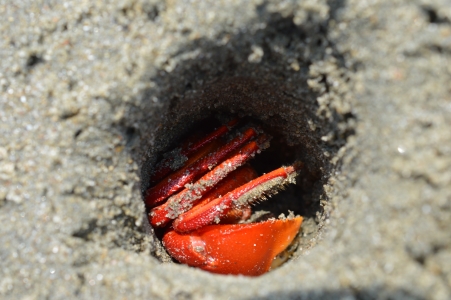
❑ They are more active at night and hide in burrows in the sand or mud during the day.
❑ They enter burrows or run away quickly to escape from enemies.
🔹 Reproduction and life cycle:
❑ Female crabs lay eggs, and the eggs hatch to give birth to young crabs.
❑ The young gradually grow into full-fledged crabs.
Environmental Importance of Red Crabs:
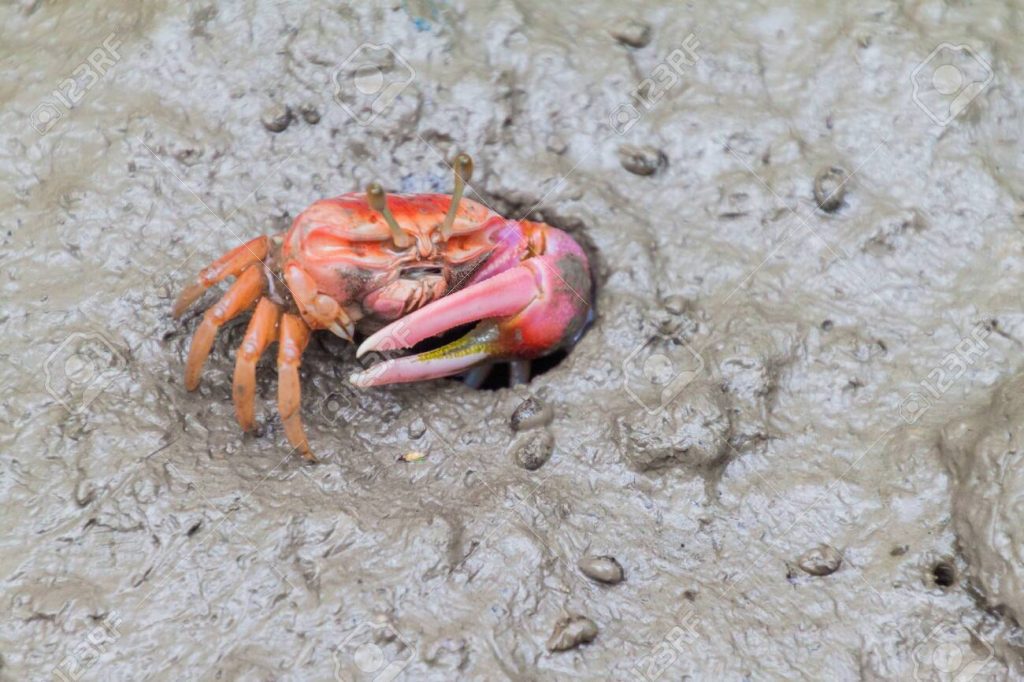
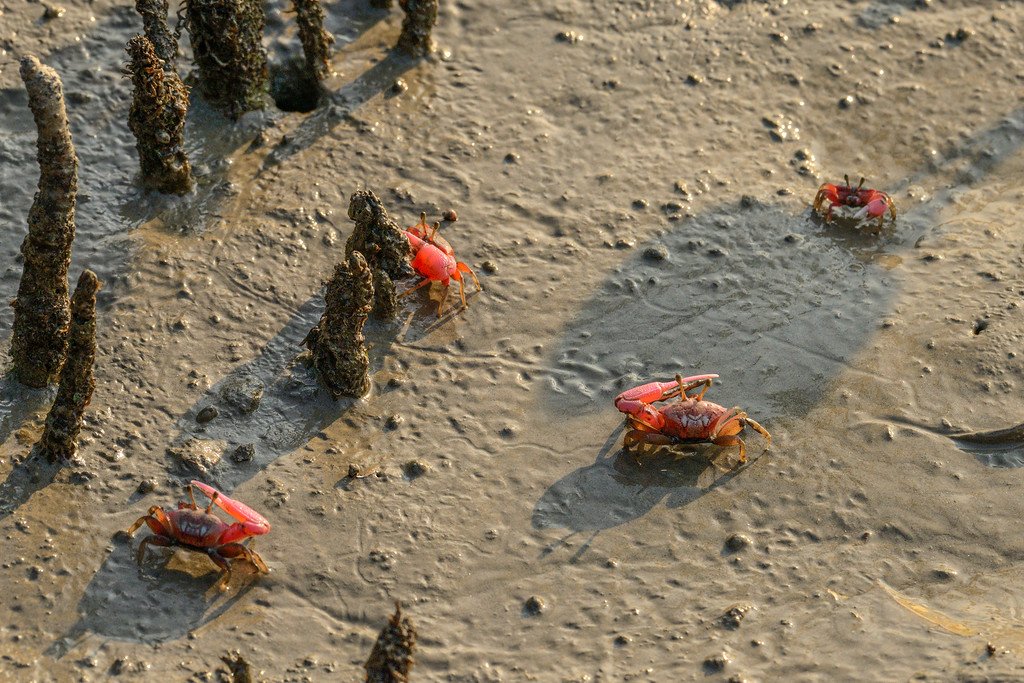
❑ Soil Aeration & Stability: Burrowing behavior prevents soil compaction, enhances water infiltration, and supports mangrove root growth.
❑ Erosion Control: Helps stabilize the soil, reducing coastal erosion and sustaining the intertidal ecosystem.
❑ Nutrient Cycling & Decomposition: Feeds on decaying plant matter, aiding in organic material breakdown and soil enrichment.
❑ Carbon Sequestration: Supports mangrove growth, which absorbs and stores carbon dioxide, mitigating climate change.
❑ Biodiversity Support: Serves as a food source for birds, fish, and marine organisms, maintaining predator-prey relationships.
❑ Ecosystem Resilience: Contributes to overall mangrove health, ensuring protection against storm surges and extreme weather.
❑ Community Benefits: A healthy mangrove ecosystem supports fish populations and provides livelihood security for local communities.
The red crab of the Sundarbans is a small yet essential species that significantly contributes to the health of this unique ecosystem. Through their burrowing, feeding, and role in the food chain, these crabs help maintain the ecological balance of the mangrove forest. However, increasing environmental threats necessitate urgent conservation efforts to ensure their survival. By protecting the red crab and its habitat, we also safeguard the Sundarbans’ biodiversity and the countless species that depend on it.
 5,000 tk
 2 Days - 3 Nights