Sheikh Tek – (400-years-old Kali Temple)
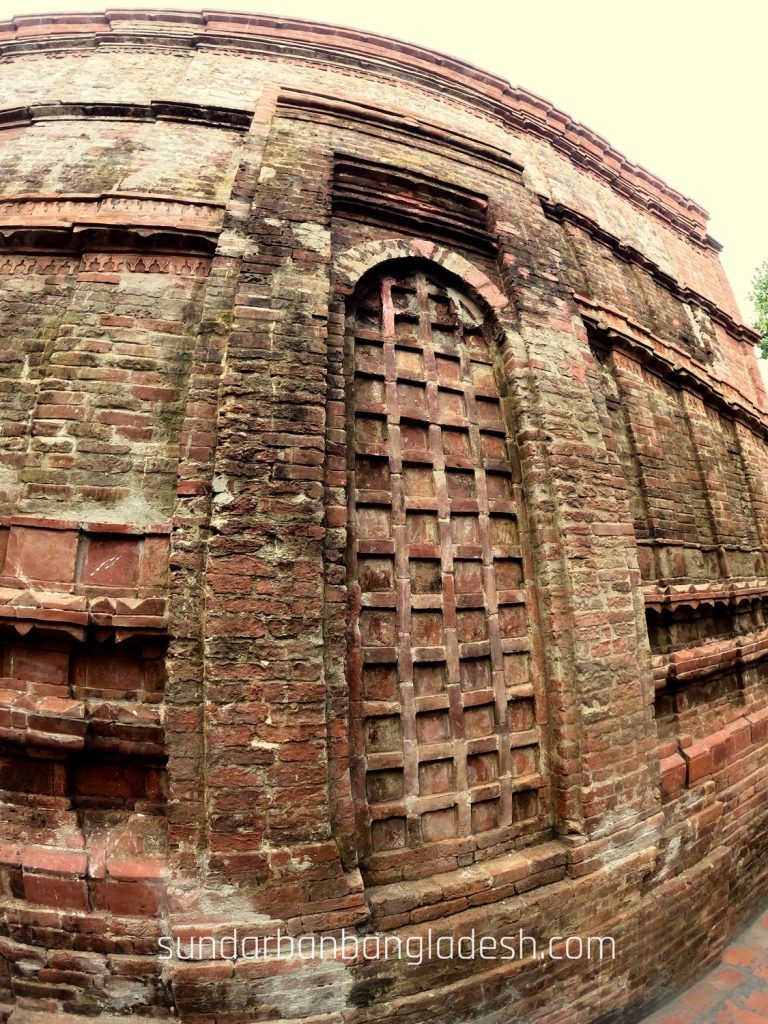
Deep forest, surrounded by dense trees. In the meantime, an ancient brick-and-stone temple stands tall. Officials from the Department of Archaeology believe it is 400 years old. Handmade bricks, lime, and local river sand were used to build the temple.
The ancient temple is located in Sheikh Tek area of compartment number 16 under the Kalabogi Forest Station of the Khulna Range of the West Forest Division of the Sundarbans. The temple is located inside the Sundarbans, about one kilometer south of the Kali Canal flowing along the southeast side of the Shibsa River. The distance from Khulna Sadar to that place by river is about 85 kilometers.
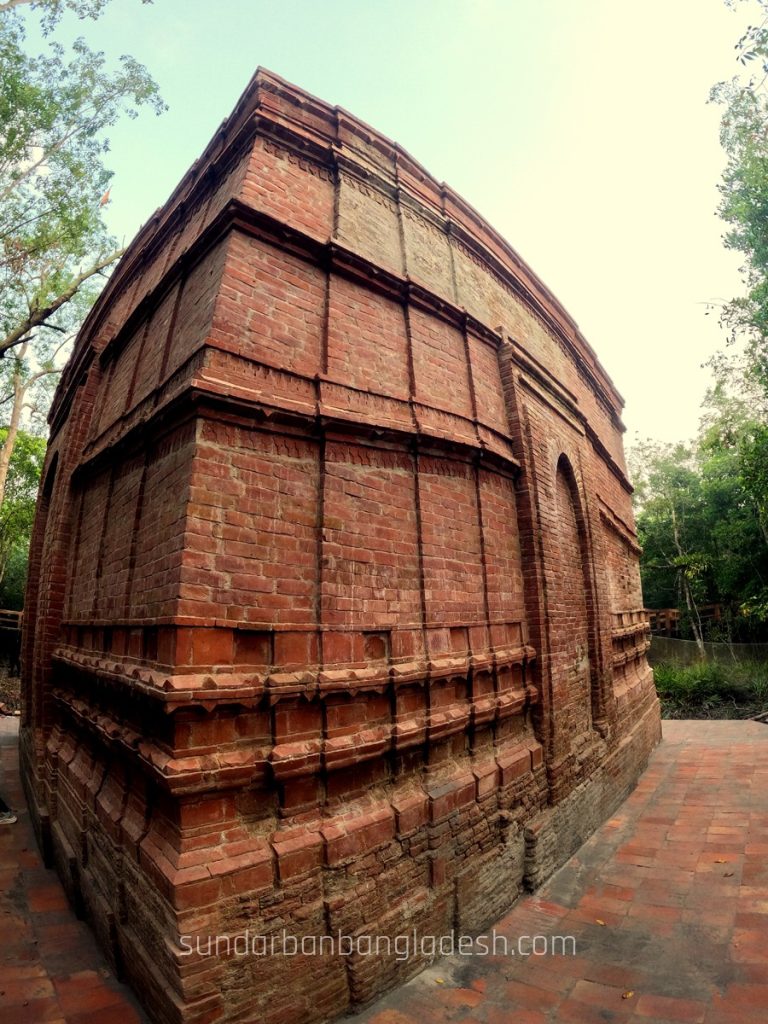
The temple is also mentioned in the book History of Jessore-Khulna, Part I, written by Satish Chandra Mitra, published in 1914. That book also contains two photographs of the temple. However, it does not mention the year in which the photographs were taken. According to the architectural design of the temple, Satish Chandra Mitra has commented that it was built by King Pratapaditya during the Mughal period.
A few kilometers before that temple, there are indications of some other ancient structures on the banks of the Sibsa River. They have been completely destroyed. Only a pile of bricks remains. Evidence of the thick brick wall that surrounded that structure is still there. That ancient structure is being destroyed by river erosion. That structure is mentioned in the book Antiquities of Bangladesh written by Abul Kalam Mohammad Zakaria, published in 1984. He referred to that structure as the house of the Sheikh. According to him, that structure was a two-story building.
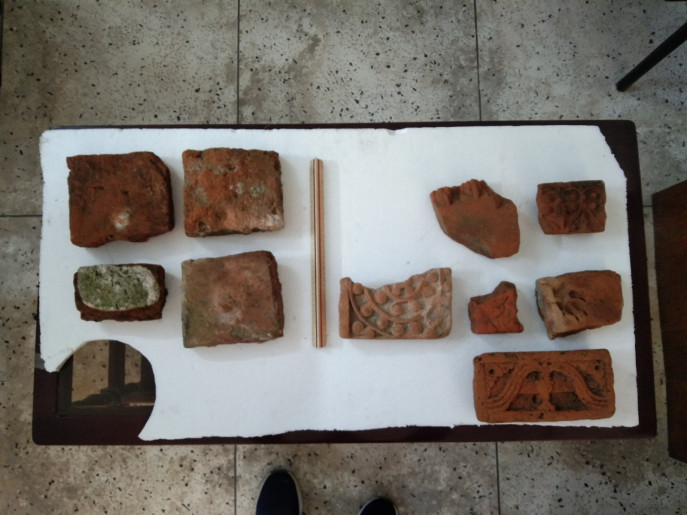
Recently, a team from the Department of Archaeology, Khulna, with the help of the Forest Department, inspected the temple and the surrounding ancient structures. Since the temple is still intact, the officials of the department have also prepared a design of the temple based on the measurements taken from there. According to the design, the outer part of the temple is 655 centimeters square. And the inner part is 325 centimeters square. The thickness of the walls is 165 centimeters. Inside, there is a small chamber on the north side. There are two entrances, 97 centimeters wide, on the south and west sides.
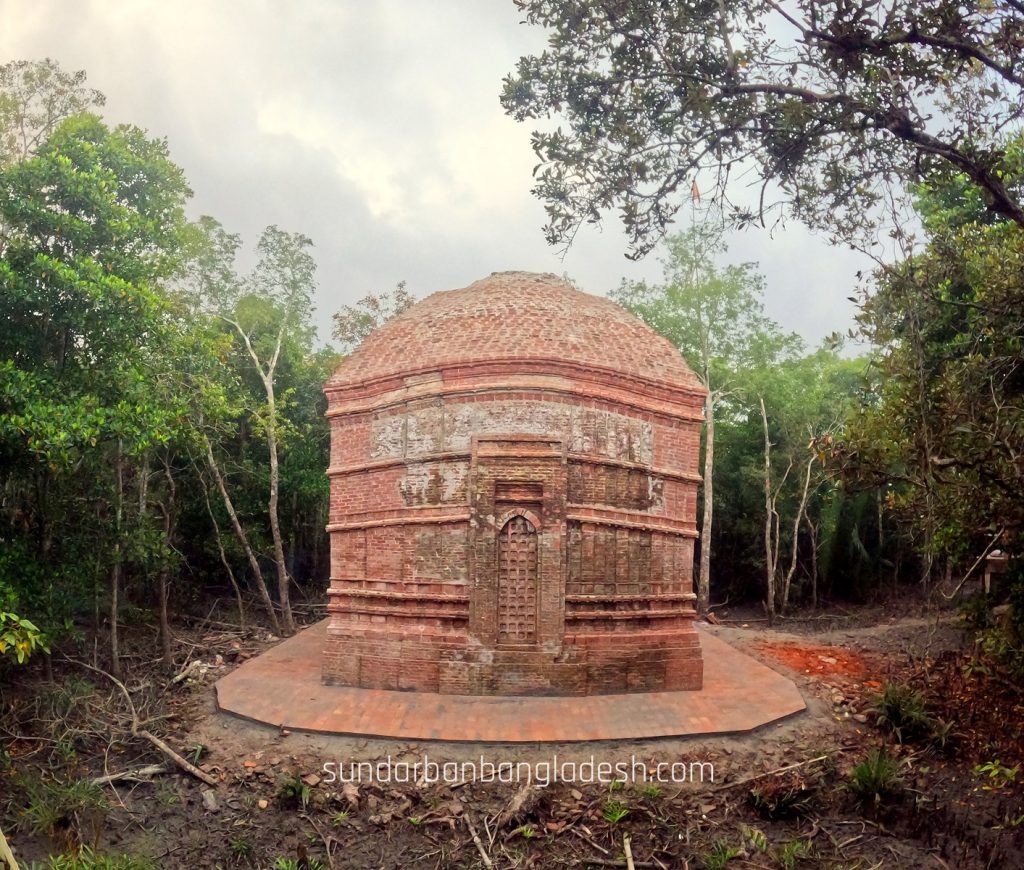
The roof of the temple is built with a dome in the Charchala style. Thin bricks have been used in the construction. The exterior of the temple has been decorated with terracotta bricks with geometric designs, flowers, vines and leaves.
The Department of Archaeology says that the south-west side of the temple has been severely damaged. There are also cracks in various places inside. It is initially believed that lime made from local snails and sand from the Sibsa river were used in the construction of the temple. Samples have been collected for chemical testing. Only when the chemical test report is available will it be possible to say what materials were actually used in the construction.
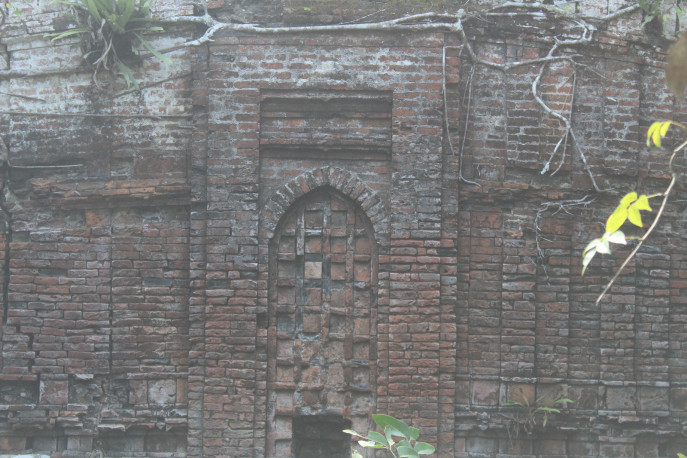
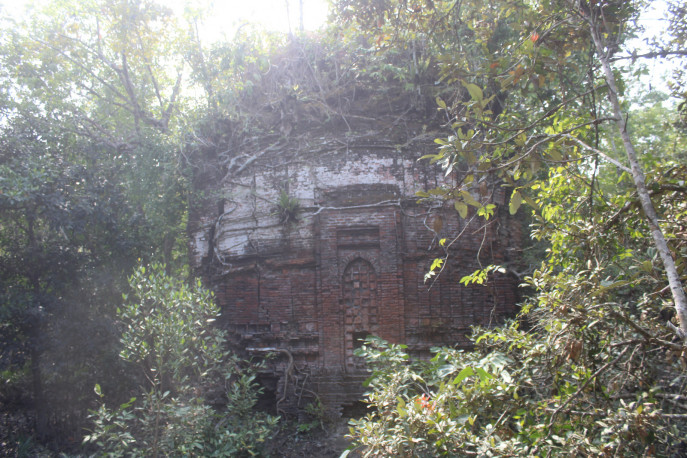
The top of the temple is full of various types of plants. The roots of large trees have penetrated and damaged the dome and walls of the temple. The dome and walls have already cracked. Due to the cracks, the bricks of the dome, southwest part and northeast corner of the temple are falling off. The walls of the temple have become damp due to the lack of sunlight.
Afroza Khan, Regional Director of the Department of Archaeology for Khulna and Barisal, said that it is estimated that the temple was built approximately 400 years ago based on its architectural structure and artistic style.
The temple bears evidence of the human settlement in the Sundarbans and its surroundings even in ancient times. If the temple cannot be preserved, it will be destroyed soon. Therefore, the temple has been renovated with the help of the Forest Department.

 5,000 tk
 2 Days - 3 Nights